
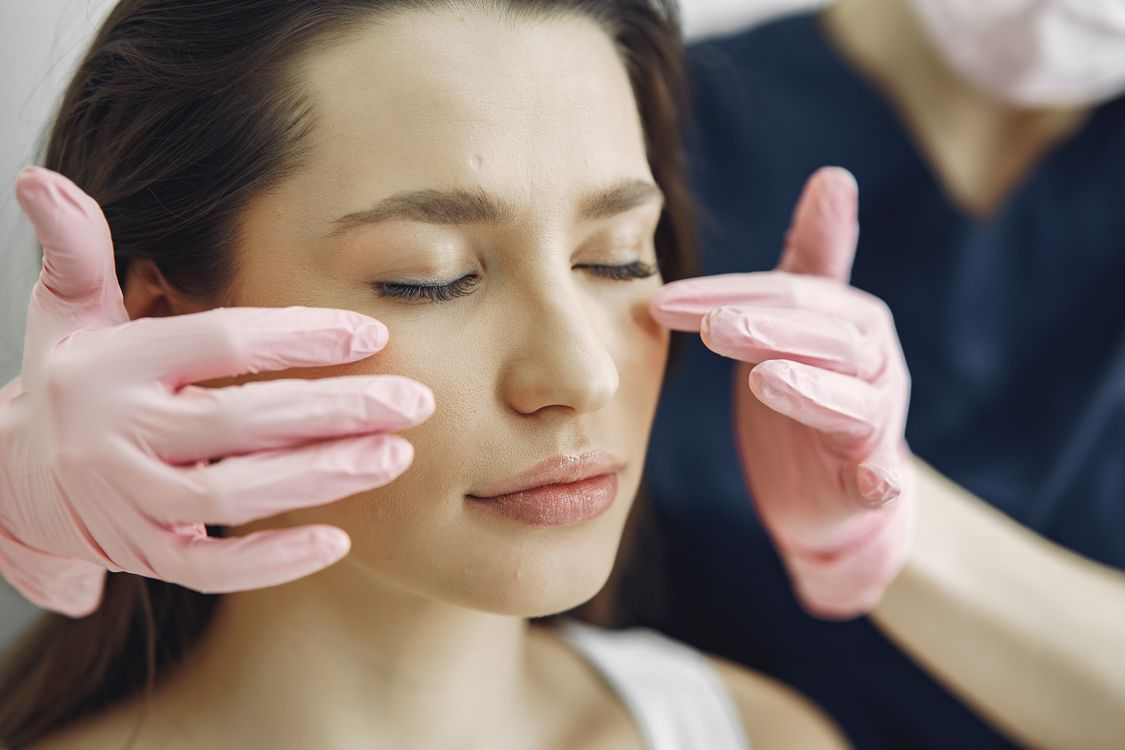
Hyaluronic acid is well known for its remarkable moisture-retaining properties, but its biological effects extend beyond hydration alone. The molecular weight of HA plays a crucial role in how it interacts with skin and hair follicle cells.
High-molecular-weight HA (usually 100–1,000 kDa) mainly remains on the surface, forming a protective barrier and reducing inflammation. Conversely, low-molecular-weight hyaluronic acid (LMW-HA), typically between 10 kDa and 100 kDa, penetrates more deeply into the epidermis and dermis. This allows it to activate specific regenerative pathways important for skin renewal, wound healing, and hair growth [1][2][3][4].
Skin Penetration and Dermal Bioavailability
A major benefit of LMW-HA is its capacity to penetrate into the dermis where fibroblasts are located. A 2025 comparative study with dissolving microneedle patches showed that LMW-HA (30–50 kDa) allowed 12.5 times more drug to pass through human skin than a needleless patch, and 1.7 times more than high-molecular-weight HA [5][6][7].
This advanced transdermal delivery method enables LMW-HA to serve as an effective carrier for active ingredients and to produce its own biological effects after reaching the dermis.
Mechanisms in Skin Renewal: Fibroblast Activation and Collagen Support
Once LMW-HA reaches the dermis, it directly interacts with fibroblasts, stretching the extracellular matrix and activating the TGF-β pathway. This leads to increased production of type I collagen and other extracellular matrix components [8]. A 2025 study indicated that using a dual-HA complex (comprising low- and high-molecular-weight HA) leads to multiple rejuvenation effects, including enhanced dermal density and reduced inflammation [9].
LMW-HA promotes angiogenesis via CD44 and RHAMM pathways, enhancing blood vessel formation. This boosts oxygen and nutrient delivery in aged or sun-damaged skin, supporting long-term dermal health [10][11][12].
A 2025 study demonstrated that an ultralow-molecular-weight hyaluronan tetrasaccharide (HA4) can regulate macrophage activity, reduce collagen breakdown, and enhance tissue remodeling, underscoring the promise of small HA fragments for precise skin healing.
Low-Molecular-Weight Hyaluronic Acid for Hair Growth
Research indicates that LMW-HA directly affects human hair follicle cells. A 2026 study on non-crosslinked HA showed it stimulates cell growth and boosts markers of follicle activation in human dermal papilla cells [16].
Another 2026 study found that medium-molecular-weight HA encourages hair follicle regeneration via the CD44/AKT signaling pathway. It activates endogenous reactive oxygen species (ROS), which then increase β-catenin levels, a crucial regulator of the anagen (growth) phase.
A separate study found that delivering LMW-HA via microneedles can alter the immune microenvironment of hair follicles, promoting vascularization and reducing perifollicular inflammation [18][19].
A patent application states that ultra-low-molecular-weight HA oligomers can help prevent hair loss and promote regrowth in conditions such as androgenetic alopecia, alopecia areata, and related disorders [20].
Furthermore, analysis of preclinical data indicates that low-molecular-weight hyaluronic acid has better antioxidant properties than high-molecular-weight HA, potentially offering additional benefits to the scalp environment [21].
Clinical Evidence for Skin Rejuvenation
Various studies have assessed LMW-HA in clinical contexts. One case series with 10 participants demonstrated that using plasma exeresis combined with non-crosslinked HA injections—containing both high- and low-molecular-weight HA—effectively reduced neck wrinkles and sagging, resulting in noticeable improvements in skin tightness.
A 2025 review emphasizes that LMW-HA accelerates tissue repair by promoting cell migration and proliferation. It also supports ceramide production and maintains overall skin integrity [23][24]. Another study shows that very low-molecular-weight HA (5 kDa) exhibits good biodistribution and can reach systemic compartments when properly administered, indicating that even small HA fragments are biologically active [25].
Role in Elevexo™ Formulations
Both Elevexo™ H (Hair Formula) and Elevexo™ S (Skin Formula) feature low-molecular-weight hyaluronic acid as a key active ingredient, paired with exosomes, growth factors, and biomimetic peptides. LMW-HA primarily improves dermal hydration, helps deliver other active components, supports fibroblast function and blood vessel formation, and creates an optimal environment for the regenerative signals from exosomes and growth factors.
This multi-ingredient approach enables LMW-HA to enhance the formulation’s overall performance without depending on high, potentially pro-inflammatory levels.
Conclusion
Low-molecular-weight hyaluronic acid is more than just a hydrator; it acts as a bioactive signaling molecule that enhances dermal penetration, activates fibroblasts, supports collagen production, encourages angiogenesis, and stimulates hair follicles. When combined with exosomes, growth factors, and biomimetic peptides, LMW-HA contributes to a holistic regenerative system for skin renewal and hair health.
For licensed professionals, understanding the science of LMW-HA helps make more informed formulation decisions and achieve more consistent results in clinical practice.
References
[1] E. Uno and F. Kim, “Targeting inflammatory macrophages with hyaluronan tetrasaccharide: Effects on fibroblast collagen degradation and synthesis,” Frontiers in Immunology, vol. 16, Feb. 2025, Art. no. 1592751. Available: https://doi.org/10.3389/fimmu.2025.1592751
[2] W. Zhang et al., “Low molecular weight hyaluronic acid increases skin hydration and exhibits anti-aging effects via regulating cell proliferation and gene expression,” Journal of Cosmetic Dermatology, vol. 20, no. 7, pp. 2234–2242, Jul. 2021. Available: https://doi.org/10.1111/jocd.14023
[3] A. M. J. J. van der Heijden et al., “Comparative efficacy of different molecular weight hyaluronic acids in topical skin care formulations,” International Journal of Cosmetic Science, vol. 44, no. 3, pp. 312–321, Jun. 2022. Available: https://doi.org/10.1111/ics.12778
[4] S. N. Bukhari et al., “Hyaluronic acid, a promising skin rejuvenating biomaterial: A review of recent updates and pre-clinical and clinical investigations on cosmetic and nutricosmetic effects,” International Journal of Biological Macromolecules, vol. 203, pp. 433–449, Apr. 2022. Available: https://doi.org/10.1016/j.ijbiomac.2022.01.151
[5] K. N. Abdul Rani et al., “Fabrication and evaluation of dissolving hyaluronic acid microneedle patches for minimally invasive transdermal drug delivery by nanoimprinting,” Gels, vol. 11, no. 2, Feb. 2025, Art. no. 89. Available: https://doi.org/10.3390/gels11020089
[6] Y. S. Choi et al., “Advanced manufacturing techniques of dissolving polymer microneedles for transdermal delivery of biomolecules,” Journal of Controlled Release, vol. 354, pp. 112–126, Feb. 2023. Available: https://doi.org/10.1016/j.jconrel.2023.01.015
[7] M. S. Ahsan et al., “Biocompatible polymer-based dissolving microneedles: Characterization, mechanical properties, and dissolution kinetics,” Polymers, vol. 16, no. 4, Feb. 2024, Art. no. 521. Available: https://doi.org/10.3390/polym16040521
[8] Y. I. Lee, S. Oh, and J. H. Lee, “Hyaluronic acid stretches the dermis, improving the extracellular matrix (ECM) and stimulating fibroblasts via the TGF-β pathway,” International Journal of Molecular Sciences, vol. 26, no. 3, Jan. 2025, Art. no. 1142. Available: https://doi.org/10.3390/ijms26031142
[9] Y. I. Lee et al., “Regenerative skin remodeling by a dual hyaluronic acid hybrid complex in multimodal preclinical models,” International Journal of Molecular Sciences, vol. 27, no. 2, Jan. 2026, Art. no. 1027. Available: https://doi.org/10.3390/ijms27021027
[10] T. C. Santos et al., “Low molecular weight hyaluronan interacts with endothelial cells to promote angiogenesis in chronic wound microenvironments,” Frontiers in Bioengineering and Biotechnology, vol. 11, Oct. 2023, Art. no. 1245781. Available: https://doi.org/10.3389/fbioe.2023.1245781
[11] M. A. Simpson and P. A. Singleton, “Transactivation of the receptor-tyrosine kinase ephrin receptor A2 by low molecular weight hyaluronan-mediated angiogenesis,” Journal of Biological Chemistry, vol. 296, Mar. 2021, Art. no. 100412. Available: https://doi.org/10.1016/j.jbc.2021.100412
[12] L. Wang, J. Zhou, and H. Zhang, “Mechanisms of LMW-HA mediated signal transduction pathways in vascular smooth muscle cells,” Journal of Cellular Biochemistry, vol. 123, no. 5, pp. 889–898, May 2022. Available: https://doi.org/10.1002/jcb.30215
[13] E. Uno and F. Kim, “Targeting inflammatory macrophages with hyaluronan tetrasaccharide: Effects on fibroblast collagen degradation and synthesis,” Frontiers in Immunology, vol. 16, Feb. 2025, Art. no. 1592751. Available: https://doi.org/10.3389/fimmu.2025.1592751
[14] R. M. Evans et al., “Transcriptomic profile (GSE298076) of dermal fibroblasts treated with low molecular weight oligosaccharides,” NCBI Gene Expression Omnibus, Jun. 2025. Available: https://www.ncbi.nlm.nih.gov/geo/query/acc.cgi?acc=GSE298076
[15] T. Harada and K. Nishikawa, “Hyaluronan tetrasaccharide promotes passive lipid diffusion and keratinocyte differentiation via ceramide synthesis regulation,” Journal of Dermatological Science, vol. 114, no. 2, pp. 101–109, May 2024. Available: https://doi.org/10.1016/j.jdermsci.2024.03.004
[16] D. Dalla Gasperina, M. C. Capillo, and R. Bettini, “In vitro hair growth promoting effect of a noncrosslinked hyaluronic acid in human dermal papilla cells,” Archives of Dermatological Research, vol. 316, no. 4, Apr. 2024, Art. no. 210. Available: https://doi.org/10.1007/s00403-024-02834-8
[17] J. Liu et al., “Medium-molecular weight hyaluronic acid orchestrates hair follicle regeneration via CD44/AKT-driven endogenous ROS activation of β-catenin,” International Journal of Biological Macromolecules, vol. 360, Apr. 2026, Art. no. 151752. Available: https://doi.org/10.1016/j.ijbiomac.2026.151752
[18] X. Chen et al., “Methacryloylated hyaluronic acid microneedles loaded with vascular endothelial growth factor and ritlecitinib for hair regeneration in androgenetic alopecia mice,” Biomacromolecules, vol. 26, no. 2, pp. 554–565, Feb. 2025. Available: https://doi.org/10.1021/acs.biomac.5c00018
[19] H. Zhou, Y. Wang, and L. Zhao, “Crosslinked methacryloylated hyaluronic acid (HAMA) hydrogel platforms for controlled intradermal growth factor delivery,” Carbohydrate Polymers, vol. 302, Feb. 2023, Art. no. 120391. Available: https://doi.org/10.1016/j.carbpol.2022.120391
[20] J. H. Kim and Y. B. Park, “Compositions and methods for hair loss mitigation based on ultra-low molecular weight hyaluronic acid oligomers,” U.S. Patent 11 684 558 B2, Jun. 27, 2023. Available: https://patents.google.com/patent/US11684558B2/en
[21] G. K. Menon et al., “Antioxidant profiles of segmented molecular weight hyaluronans in skin barrier protection against UV oxidative stress,” Free Radical Biology and Medicine, vol. 182, pp. 143–152, Apr. 2022. Available: https://doi.org/10.1016/j.freeradbiomed.2022.02.019
[22] T. S. Nugroho, “Aplikasi low molecular weight HA bermanfaat dalam penyembuhan luka, peremajaan kulit, dan pengobatan berbagai kondisi kulit,” Cermin Dunia Kedokteran, vol. 52, no. 1, pp. 14–19, Jan. 2025. Available: https://doi.org/10.55175/cdk.v52i1.2411
[23] R. Stern, “Hyaluronan fragments: An information-rich system with deep tissue hydration mechanics,” European Journal of Cell Biology, vol. 101, no. 2, Jun. 2022, Art. no. 151214. Available: https://doi.org/10.1016/j.ejcb.2022.151214
[24] M. Kawada et al., “Hyaluronic acid for skin health: Science-backed hydration, viscoelastic properties, and overall rejuvenation,” Nutrients, vol. 15, no. 14, Jul. 2023, Art. no. 3152. Available: https://doi.org/10.3390/nu15143152
[25] A. F. G. Di Stefano et al., “Steady state plasma and tissue distribution of low molecular weight hyaluronic acid after oral administration in mice,” Natural Product Research, vol. 37, no. 22, pp. 3812–3817, Nov. 2023. Available: https://doi.org/10.1080/14786419.2023.2197598